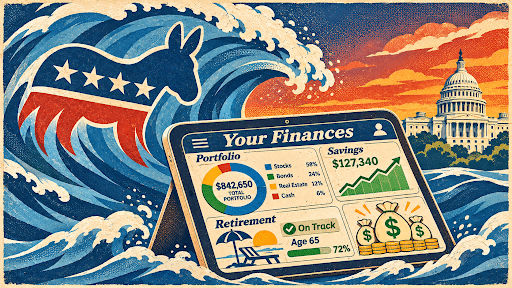

We’re not calling for a 100% chance of recession in our financial forecast because no one knows exactly what the future holds. But that hasn’t stopped a media storm from a-brewin’.
You’ve likely heard a lot about recession fears recently. But it’s critical to keep your head and act proactively in the face of fear.
Below, you’ll see the strategies we use to help clients prepare for the worst. Use them to build yourself a financial bunker of sorts. That way, if the storm hits, you’re ready to wait it out. Let’s get started.
1. Solidify Your Emergency Reserve
Take a look at your rainy day fund. Make sure it’s equipped for a market downpour. You’ll want a minimum of three months of living expenses on hand.
Now, wait a second. Let’s be clear about what counts as a living expense. You might feel like you’re dying without an HBO subscription, but you’re not. What you need to cover are things like your mortgage (or rent), utilities, health insurance, car expenses, and groceries.
Now those are living expenses!
Also, three months is the minimum. You may want to beef it up to six months, especially when you consider that the average bear market in one historical analysis lasted 388.8 days.¹
2. Find Ways to Save, Not Spend
Think about whether you really need to go out to eat again. Consider whether now is the best time to get the basement remodeled. Take a look at how much value you’re getting out of that TV and movie subscription.
Geez, you guys really hate HBO!
We don’t. We love watching you own the things you want. What we hate is watching those things own you. And sometimes you need a little tough financial love.
It’s hard to change your financial habits. But when you take inventory of what things are truly costing you, it can be a much-needed wake-up call. Together, we’ll help you analyze your expenses and identify areas where cutting back can bring back some confidence.
Now, about big-ticket items…
These deserve special attention, especially during the holidays. It’s easy to use the occasion to justify overpriced gifts, out-of-budget trips, and buying more than you planned.
3. Be Honest About Your Job Security
Take stock of how things are going at your job. You may be looking for a new one or feeling unsure about the security of your current one. Either way, your employment prospects deserve a closer look.
While there may be no such thing as true “job security,” some positions are particularly vulnerable during a recession.
Your income may be the main thing keeping you and your family afloat. And while it’s unpleasant to think about, preparing for a possible job loss is vital. Now’s a good time to get your résumé in order, look at your savings, and develop a long-term plan with our team.
If you’re nearing retirement, it may also be time to consider whether a job loss could lead to an earlier retirement.
4. Know Your Fears Ahead of Time
Times of financial insecurity can leave you prone to major financial mistakes. Some of the biggest revolve around your investments, so it helps to recognize the temptations ahead of time.
In our experience with clients, three temptations come up repeatedly. You may feel the urge to:
Panic-sell when the market drops.
Chase market trends.
Overcorrect by moving too much into “safer” investments, such as bonds and CDs.
Panic-selling after a drop can lock in losses and leave you with less capital to reinvest. Chasing a market trend can mean buying after prices have already surged, just as the gains you hoped to capture start to disappear. And moving too much into “safer” investments can make it harder to keep up with inflation or take advantage of long-term opportunities.
5. See the Long-Term Opportunities
Not everything’s about being on the defensive. When staring down the barrel of a recession, it can make sense to fire back. Part of being an investor is learning to see opportunity where others see fear.
During a recession, the broad market can take a hit. But a downturn can also give long-term investors a chance to buy at lower prices. Consider how quickly the S&P 500 rebounded from some past market lows. Each of these gains came in less than a year:²
More than 19% following the low after the dot-com bubble burst.
More than 35% following the low of the Great Recession.
More than 36% following the low of the COVID-19 crash.
Together, we’ll help you look for opportunities when investments are on sale. We’ll help keep your thinking dialed in on the long term. And we’ll be at your side as you resist the temptation to act on short-term fears.
Crafted Finance Helps Every Step
At Crafted Finance, we want you to feel prepared when talk of a potential recession picks up. One place to start is with what you own and what you spend.
We work with our clients to regularly take inventory of their assets and spending habits. That helps us identify where to build up savings, such as an emergency fund, and where to cut back, such as a big-ticket purchase that can wait.
We also help clients think through the decisions a recession might bring. Consider how you’d cover your bills if you lost your job, what you’d do if your investments dropped in value, and which investments you’d want to buy if prices fell. Working through those questions ahead of time gives you a plan to turn to when emotions run high.
When you’re ready to prepare for a potential recession, schedule a complimentary consultation or call us directly at (650) 336-0598. We’ll help you devise a plan that works for you and keeps your retirement goals in view.