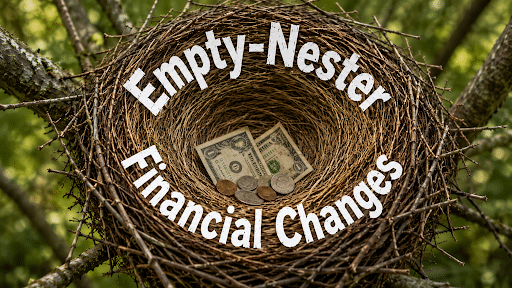
Becoming an empty nester can feel like a major life transition. The household is different, the schedule is different, the spending rhythm may be different, and long-term priorities can start to feel more personal to you again.
This stage can also create a natural opening to reassess your financial plan around your own future. After years of planning around your children’s needs, there may be more room to focus on what you want your own next chapter to support.
Clarify What Has Actually Changed in Your Financial Life
The empty-nester stage may or may not change the math in a major way. After years of groceries, school expenses, activities, transportation, tuition, and day-to-day support, you may finally see parts of the budget loosen up.
At the same time, the change is often more layered than people expect. In my experience working with empty nesters, the best first step is to identify which expenses have truly declined, which ones are temporary, and which ones stayed the same [but might have changed].
Where Cash Flow Often Frees Up
The biggest drops in expenses often come from the line items that were tied to having children actively living at home:
Groceries and household supplies may decline once fewer people are eating meals at home, using utilities, and driving everyday household spending.
School-year costs may fade as sports, activities, tutors, school fees, supplies, and routine parent-funded expenses wind down.
Transportation costs may improve if you no longer need as many vehicles, fuel costs, repairs, or insurance coverage tied to a child at home.
Day-to-day support may shrink once your children begin paying for more of their own meals, subscriptions, clothing, entertainment, and personal expenses.
Tuition or education costs may eventually end, which can create one of the largest openings for savings if that cash flow is redirected before it gets absorbed elsewhere.
When the Change May Be Smaller Than You Think
The other side of this transition is that some child-related costs do not fully disappear. They may simply change shape, and that can keep your financial picture closer to what it looked like before.
I’ve often seen the old expense turn into a new version of support:
College tuition → graduate school help, certification programs, or student loan support.
A child living at home → rent help, security deposits, furniture, or moving costs.
Family vacations → travel to visit adult children or pay for everyone to gather in one place.
Car and insurance costs → emergency repairs, vehicle replacement help, or temporary coverage support.
Launching children into adulthood → weddings, first-home assistance, grandchildren-related travel, or emergency family help.
None of those decisions are automatically a problem. Many parents want to help, and that support can be part of a healthy financial plan when it is measured and intentional.
The issue is timing and visibility. If your goal is to free up more savings, improve retirement readiness, or reduce work pressure later, the new costs need to be planned instead of simply absorbed. They may be far lower than the old costs, but they can still prevent your cash flow from changing as much as you expected.
Consider Redirecting Freed-Up Cash Flow Toward Bigger Financial Goals
Once you know what has truly changed, the next step is deciding where any extra room should go. For empty nesters, the best fit usually depends on how close you are to retirement, how stable your income is, and which parts of your plan need the most attention:
Retirement Savings: This often makes sense when income is still strong and you want to devote more income towards your retirement. If college or child-related expenses have declined, increasing contributions to workplace retirement plans, IRAs, HSAs, or brokerage accounts may help you turn a temporary cash-flow opening into long-term flexibility.
Taxable Investment Flexibility: A taxable brokerage account can be useful when you want money for “unexpected” support for your kids.. This may also fit well if you expect to retire before you can comfortably draw from retirement accounts, want a bridge account for major purchases, or need more flexibility around future withdrawals.
Debt Reduction: Extra cash flow can help clean up high-interest debt, lingering obligations, or mortgage decisions before retirement. This may be a strong fit if monthly payments are limiting your ability to save, if the debt creates stress, or if reducing fixed expenses would make retirement feel more secure.
Healthcare Reserves: Empty nesters who are thinking about early retirement, long-term care exposure, or higher future medical costs may want to build stronger healthcare reserves. This can be especially useful if you may leave work before Medicare, carry a high-deductible plan, or want more cash available for health-related surprises.
Lifestyle Priorities: Travel, home projects, hobbies, and experiences may become more realistic once the household changes. This can absolutely belong in the plan, especially if those goals are part of why you worked and saved, but the spending should be balanced against retirement confidence and other long-term needs.
Revisit Retirement Timing While Your Own Future Is More Visible
When children become more independent, the retirement planning bogey comes at you quickly. Your own timeline, future spending, and desired lifestyle may be easier to define when fewer parts of the budget revolve around active child-raising years.
These retirement planning questions may deserve a fresh look after the empty-nester transition:
Does your current retirement date still fit your savings, projected spending, investment balances, and expected income sources?
Should your retirement spending assumptions be updated now that housing, travel, healthcare, family support, and lifestyle goals may look different?
Does your investment allocation still match your timeline, especially if retirement is within the next 5 to 10 years?
How might Social Security, pensions, retirement accounts, taxable accounts, Roth assets, and cash reserves work together when paychecks stop?
Would delaying or moving up retirement change your cash flow, tax picture, healthcare costs, or comfort level with market risk?
Please Note: This is also where the conversation becomes more personal. Some empty nesters want to work longer because they enjoy the pace and purpose. Others realize they want more freedom sooner, especially once their children are launched and the next chapter feels closer.
See if Empty-Nester Years Can Create Better Tax Planning Windows
The empty-nester stage can create tax planning opportunities, especially when income, deductions, giving, retirement contributions, and future withdrawals are changing. The right window depends on where you are in the years between peak earnings and retirement income:
Peak Earning Years: Many empty nesters are still in high-income years, which can make pre-tax retirement contributions, charitable planning, equity compensation decisions, and tax bracket management more meaningful. This is often the time to coordinate bonuses, stock compensation, capital gains, and retirement plan deferrals more carefully.
Lower-Income Transition Years: If income drops before Social Security, pensions, or required retirement account withdrawals begin, Roth conversions or capital gain planning may deserve a closer look. This can be especially relevant if you retire before your taxable income rises again later.
Pre-RMD Years: The years before required minimum distributions can be useful for managing future taxable income from traditional retirement accounts. Empty nesters who are nearing retirement may have a window to spread taxable income more intentionally instead of waiting until distributions are required.
Medicare Lookback Years: Taxable income in the years leading into Medicare can affect future premium exposure. Large gains, Roth conversions, business income, or retirement account withdrawals may need to be coordinated so one decision does not create an unexpected premium issue later.
Charitable Giving Years: If giving is part of your family’s priorities, appreciated assets, donor-advised funds, and future qualified charitable distributions may need to be planned alongside the broader tax picture. This can help your giving strategy fit your income, investment, and estate planning goals.
Update the Parts of Your Plan That Were Built for an Earlier Stage
Many financial plans still carry assumptions from when children were younger, dependents were at home, and income protection was the main concern. Once your children are adults, those assumptions may no longer match your life.
These planning areas may also need to be refreshed for this next stage:
Beneficiary designations on retirement accounts, life insurance, annuities, bank accounts, and brokerage accounts should be reviewed so they still match your wishes.
Wills, trusts, powers of attorney, and healthcare directives may need updates now that your children are adults and family roles may have changed.
Adult children may need a defined role in the plan, such as successor trustee, healthcare agent, financial power of attorney, or emergency contact.
Life insurance should be reviewed if the original purpose was replacing income, paying for college, or protecting minor children.
Disability coverage, long-term care planning, and emergency reserves may need a different focus as the plan shifts toward retirement security and later-life flexibility.
Account titling and transfer-on-death instructions should be checked against the estate plan so assets pass according to your current wishes.
Empty Nester Financial Planning Changes FAQs
1. Does becoming an empty nester usually lower my expenses?
It can, but the change is often uneven. Groceries and daily household costs may decline, while college, travel, insurance, housing help, weddings, or support for adult children may continue.
2. Should I increase retirement savings after my children leave home?
It may make sense if your cash flow has improved and your retirement plan still needs more funding. The best choice depends on your savings gap, tax picture, debt, emergency reserves, and how close you are to retirement.
3. How should I think about helping adult children financially?
Start by defining what kind of help you are willing to provide, how much you can afford, and whether the support is a gift, loan, or one-time exception. The goal is to help with clarity rather than letting support quietly reshape your retirement plan.
4. Is this a good time to revisit my retirement timeline?
Yes, this can be a useful time to revisit your timeline because your household spending and lifestyle goals may be easier to see. Retirement timing should be reviewed alongside income sources, savings, investments, healthcare, taxes, and family support.
5. What financial documents should I update once my children are adults?
Review beneficiary designations, wills, trusts, powers of attorney, healthcare directives, life insurance, and account titling. You may also need to decide whether adult children should have any formal role in financial or healthcare decisions.
Get Help Building a Financial Plan That Works for Your Empty-Nester Years
Becoming an empty nester can affect cash flow, retirement timing, taxes, family support, estate planning, insurance, and long-term goals. This stage can be a good time to pause, take stock, and decide what your financial plan should support next.
Our financial advisory team can help clarify what has changed, model future goals, evaluate retirement readiness, review cash flow, and identify planning opportunities. We can also help you see how today’s choices may affect retirement confidence, tax exposure, liquidity, and family flexibility later.
We can coordinate investments, taxes, family support, estate planning, insurance, and retirement strategy into one cohesive plan that reflects the life you are building now. To talk through what this next stage could look like, schedule a complimentary consultation with our team.