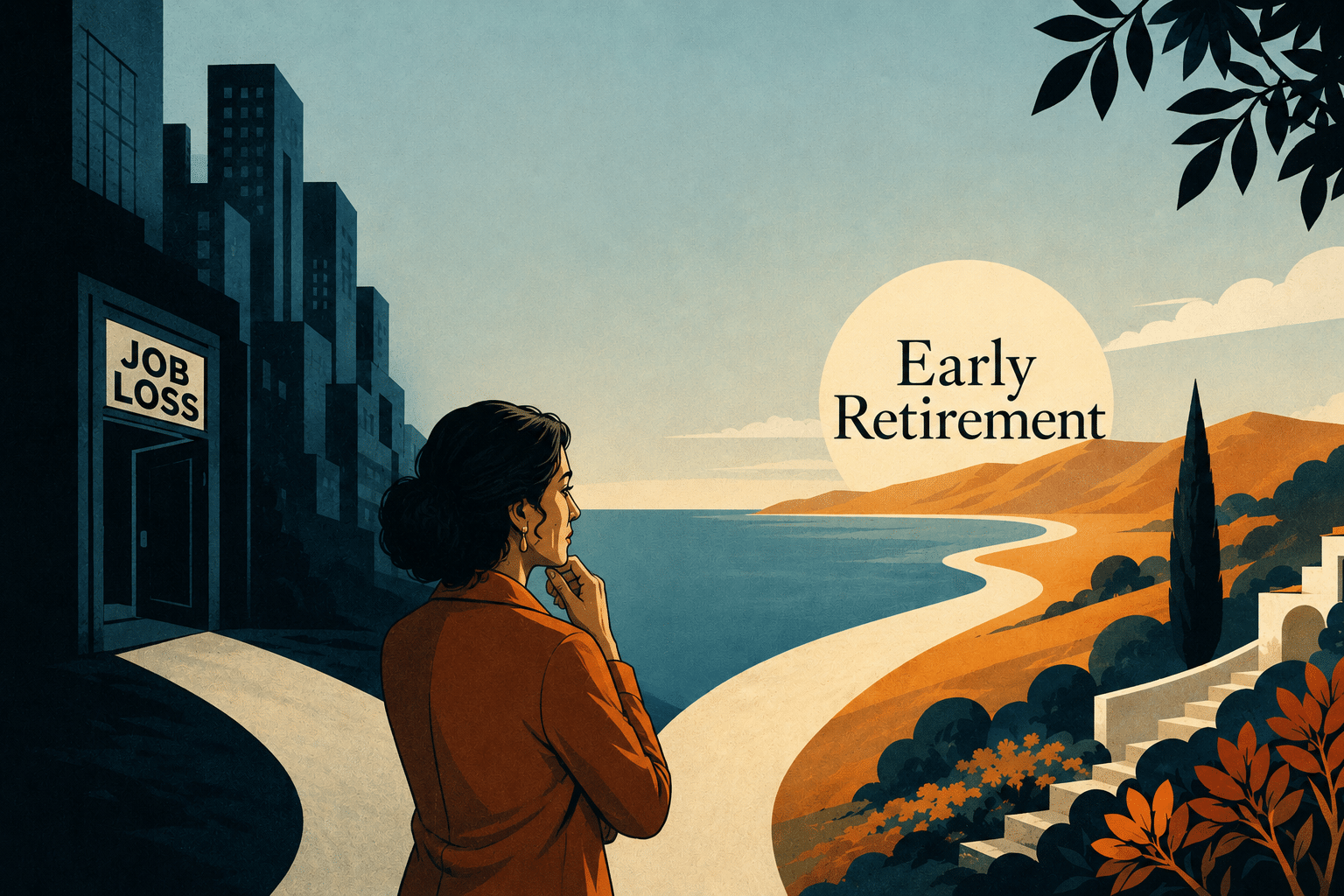
Losing or leaving a job late in your career can shake up the timeline you thought you were following. This question can surface after layoffs, company restructuring, mergers, leadership changes, technological change, burnout, or a growing sense that you may be ready for a different stage of life.
The next step is figuring out whether the job loss is a retirement setback, a temporary bridge issue, or a sign that retirement may be closer than expected. The answer depends on your personal readiness and whether a personalized financial plan can support the transition.
Emotional Green Flags You May Be Ready to Retire
Before assuming you need to replace the job you just lost, it can help to pause and look at what your life may already be telling you. In some cases, the job loss is less of a starting point and more of a decision point you were gradually approaching.
Potential emotional signs may include:
Career Burnout: You may feel mentally or emotionally done with the career path you have been on, even if you did not plan to leave at this exact moment.
More Focus on Health and Relationships: Wanting more time for your health, family, marriage, friendships, or personal well-being can signal that your priorities have shifted.
Serious Retirement Thoughts Before the Job Loss: The job loss may have intensified a retirement question that had already been showing up in your private thoughts and conversations.
Limited Interest in Rebuilding the Same Career: Little excitement about interviewing, proving yourself again, or returning to the same pace may suggest the old career no longer fits.
More Interest in Flexibility Than Advancement: You may care more about time, control, and optionality than another title, promotion, or compensation package.
Financial Green Flags You May Be Ready to Retire
Once the emotional side is on the table, the decision shifts from desire to capacity. The financial green flags are not final answers, but they can quickly show whether retirement after job loss is realistic enough to test seriously.
Potential financial green flags may include:
Meaningful Investable Assets: Retirement may be more realistic if your portfolio can potentially support withdrawals, taxes, and market volatility over a long time horizon (think $1.5M to $5M outside of your primary residence, circumstances vary widely).
Flexible Lifestyle Spending: A budget with adjustable expenses gives the plan more room to absorb market stress, health care costs, or a longer transition period.
Manageable Debt: Lower debt pressure reduces the monthly cash flow your retirement income strategy needs to produce.
Clear Health Insurance Bridge: Health coverage before Medicare can become one of the biggest constraints if employment ends earlier than planned.
Income Beyond the Portfolio: Spouse income, rental income, consulting income, deferred compensation, pensions, or other sources can reduce the burden on investment withdrawals.
Cash or Severance for the Transition: Severance, cash reserves, or short-term liquidity can help cover spending while the longer-term retirement decision is tested.
How a Personalized Plan Can Let You Know for Sure
Emotional readiness and financial green flags can point in the right direction. A personalized plan turns those signals into a clearer decision by showing what is sustainable, what is fragile, and what trade-offs are available.
The plan needs to connect spending, assets, taxes, health insurance, income timing, investment strategy, concentrated stock exposure, and long-term goals. The value comes from answering the right questions in the right order.
Understand What Retirement Really Needs to Cost
A personalized plan should begin with a realistic view of what retirement would actually cost. The goal is to identify the income your household needs, rather than comparing retirement spending to the paycheck that disappeared.
Core expenses and flexible lifestyle costs should be separated. Housing, food, insurance, utilities, taxes, and baseline health care may need to be covered in nearly every scenario, while travel, home projects, gifting, family support, charitable giving, and other lifestyle expenses may have more room to move.
This distinction matters after a late-career job loss. Retirement may be more realistic if the true spending need is lower than the old income level, especially when payroll taxes, retirement contributions, commuting costs, work expenses, and certain savings goals change after employment ends.
Map Out Income Sources, Timing, and Taxes
After spending is clear, the plan can compare that need against the income sources available now and later. Timing matters here, since a household can have enough lifetime resources and still face cash flow pressure in the early years.
A strong plan should map out income details such as:
Severance, unemployment benefits, spouse income, consulting income, rental income, pensions, deferred compensation, Social Security, and portfolio withdrawals.
Which income sources are temporary, recurring, guaranteed, variable, or dependent on future choices.
When each income source begins and whether there are gaps before Social Security, Medicare, pensions, or required retirement account distributions begin.
How income timing affects the need for portfolio withdrawals during the transition period.
How taxes may differ across pre-tax accounts, brokerage accounts, Roth accounts, Social Security, pensions, and other income sources.
Please Note: The retirement decision depends on after-tax income timing. Money on the balance sheet only becomes useful when the plan shows when it can be used, how it will be taxed, and what it needs to cover.
Evaluate Health Insurance and Other Bridge Planning Needs
Health insurance can be one of the biggest practical barriers to retirement before Medicare. The plan needs to look at the cost, coverage, and timing of the gap between employer benefits and the next stable source of coverage.
A bridge plan should evaluate issues such as:
COBRA, spouse coverage, marketplace coverage, retiree medical benefits, or private insurance where relevant.
Premiums, deductibles, provider networks, prescriptions, out-of-pocket limits, and potential tax credits.
How long you need coverage before Medicare begins.
Whether severance, cash reserves, or short-term income can help cover the transition.
Other bridge issues, including temporary consulting income, delayed retirement income sources, or spending adjustments during the gap years.
Please Note: An early retirement may appear affordable in a long-term projection while still creating pressure during the bridge period. Health insurance, short-term liquidity, and income timing need to be planned together before the decision is made.
Create a Tax-Savvy Withdrawal and Investment Strategy
Once spending, income timing, and bridge needs are clearer, the plan can decide which assets should be used first. Cash, taxable brokerage accounts, pre-tax retirement accounts, Roth accounts, pensions, Social Security, and other assets should not be treated as interchangeable dollars.
The withdrawal order affects taxes, liquidity, and future flexibility. A taxable account may provide accessible funds, but selling investments can create capital gains. Pre-tax retirement account withdrawals can fill income gaps, but they add ordinary income and may affect later tax planning. Roth assets can provide tax-free flexibility, which can make them valuable to preserve for later years, higher-tax periods, or heirs.
A lower-income year after job loss can also create planning opportunities. The plan may test partial Roth conversions, planned pre-tax withdrawals, capital gains harvesting, charitable giving strategies, or the use of cash reserves to manage taxable income. These choices should be coordinated with health insurance, Social Security timing, future required distributions, and the household’s expected tax picture over several years.
The investment strategy should also reflect the new retirement timeline. Retiring sooner may increase the need for cash reserves, shorter-term stability, and a clear plan for funding withdrawals during market declines. If you have stock-based compensation, or a large single-company position tied to your former employer, the plan should weigh diversification, taxes, liquidity needs, and downside risk before any major sale decision.
Test Scenarios and Build an Ongoing Review System
A strong retirement decision should compare several realistic paths before you commit. This is where the plan can show whether one adjustment changes the answer in a meaningful way.
Scenario planning can compare options such as:
Retiring now.
Working part time.
Consulting temporarily.
Reducing spending.
Delaying Social Security.
Using severance first.
Waiting until Medicare eligibility.
These scenarios can reveal the impact of small but meaningful changes. Consulting for one year, delaying portfolio withdrawals, trimming flexible spending, or waiting for Medicare may reduce the pressure on the portfolio and improve the margin for error. It can also reveal how exposed you are to the risk of lower returns early in retirement (i.e. sequence of returns risk).
The plan should also include ongoing review. Withdrawals, taxes, spending, health care costs, market conditions, and family needs can all shift after the first decision is made. The goal is to build a retirement plan that can adjust as life changes.
Late-Career Job Loss and Earlier Retirement FAQs
1. Can a late-career job loss become an earlier retirement?
Yes, it can. A job loss may create the moment to test whether retirement is already within reach, especially if you have strong savings, manageable spending, a health insurance plan, and enough income sources to support the transition.
2. What are the biggest signs I may be emotionally ready to retire?
Common signs include career burnout, less interest in returning to the same pace of work, more focus on health and relationships, and a stronger desire for flexibility. These signs matter, but they still need to be paired with financial analysis.
3. What financial signs may suggest retirement is possible after losing a job?
Retirement may be more realistic if you have meaningful investable assets, flexible spending, manageable debt, short-term liquidity, income beyond the portfolio, and a clear health insurance bridge. These pieces need to be tested together.
4. How should severance affect the decision to retire or keep working?
Severance can create breathing room, but it should be treated as a transition asset rather than a full retirement answer. It may help cover spending, delay portfolio withdrawals, fund health insurance, or give you time to compare retirement with part-time work or consulting.
5. Why is health insurance such a major issue before retiring early?
Health insurance can create a large cost gap before Medicare begins. Premiums, deductibles, provider networks, prescriptions, and income-based coverage options can all affect whether early retirement works in practice.
6. How can a personalized retirement plan help me decide what to do next?
A personalized plan helps compare your real options. It can show whether you can retire now, whether a bridge plan would make the decision stronger, or whether working in a different capacity may give you more flexibility and confidence.
We Can Build a Plan to See if Retirement Is Within Reach
You may have several personal and financial green flags that retirement after job loss could work, but that does not mean the decision should be made on instinct alone. A late-career job loss can create urgency. A personalized plan can turn that urgency into a clearer decision.
Our team can help account for the variables that shape the answer. That includes spending, taxes, income timing, health insurance, Social Security, withdrawal order, portfolio risk, concentrated stock positions, and the need for future adjustments as life changes.
We can help you compare options, understand trade-offs, and determine whether you can retire now, need a bridge plan, or should keep working in a different capacity. If you are trying to decide whether a late-career job loss can become an earlier retirement, schedule a complimentary consultation.